
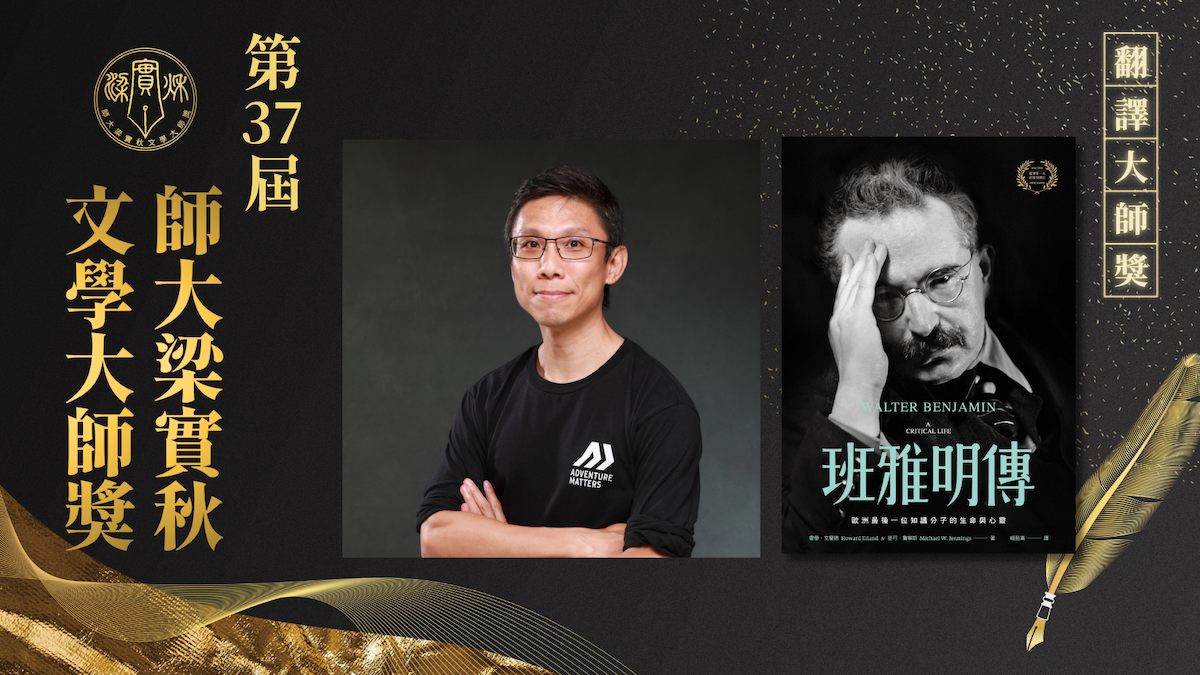
【第37屆師大梁實秋文學大師獎】《班雅明傳:歐洲最後一位知識分子的生命與心靈》得獎書評
- 作者
- 最新文章

Readmoo編輯團隊
文/馬耀民 (國立臺灣大學外文系副教授)
有看過賴盈滿先生《衣裳哲學》的讀者,都會欽佩他能成功地把湯瑪斯・卡萊爾維多利亞時期典雅含蓄的筆調所呈現的哲學思辨、小說、傳記、自傳不同文類書寫風格,變得條理分明,流暢可讀。《班雅明傳》對譯者的挑戰不遑多讓,但是賴先生的表現仍是可圈可點。
《班雅明傳》作者利用班雅明不同時期的著作和書信等材料,從哲學、社會學、宗教、文化,及美學思想等不同層面,呈現傳主的四十八年短暫人生。而這段生命又嵌入他一生不同階段的歷史背景,和他與無數赫赫有名的人士往來與互動。這個複雜的文本網絡使得譯者必須克服空前的挑戰。
他不但要熟稔當時的歷史文化脈絡,更要對班雅明的著作有一定程度理解,方能在長達七百五十多頁的篇幅裡,適切、連貫地呈現傳記作者心目中班雅明的面貌。除了資訊量極高的主要內容,也即是班雅明的思想內容與發展的部分,原作愛用長句的文體特色,在翻譯技術面上,也是對譯者的一大挑戰,我選了一個與文學翻譯比較相關的例子,是作者首次對班雅明儀表做描述,以及譯者處理的方式:
His appearance and physical bearing, including his expressive hand gestures, tortoise-like intermittent gait, melodious voice, and letter- perfect speech; the pleasure he took in the physical act of writing, in the act of waiting, or in compulsive collecting and flânerie; his self-ritualizing idiosyncrasies of taste; and his eccentrically urbane charm—all these testified to an old-world, antiquarian disposition, as though he had been transplanted from the later nineteenth century.
他的一舉一動,從豐富的手部動作、走走停停的緩慢步伐、抑揚頓挫的語調、字字完美的發言到他從寫字、等待、過度囤積與漫遊(flânerie)獲得的樂趣,再到他刻意儀式化的品味癖好與古怪的高雅魅力,在在突顯了他的老派傾向,宛如來自十九世紀下半葉的古人。 (22頁)
是的,作為一本傳記,《班雅明傳》的確處理了班雅明複雜的思想脈絡,且並不是每個讀者都有強烈的興趣和毅力「讀下去」的。但是既然那是傳記,傳記作家也是在處理人物,其逐步建構的班雅明,何嘗不是一個角色塑造的過程?
從這個角度來看,在龐雜的思想、文化、人際關係脈絡下,《班雅明傳》其實有著強烈的文學性。前面我有提過,此傳記大量引用了傳主的文字和書信,讓傳主自己說話,在閱讀的過程裡,我們可以感到傳主「現身說法」、「躍然紙上」。就如同作者在〈引言〉便點出了班雅明的寫作風格,這裡僅引用譯者的文字:
班雅明找到的文學形式,其深刻與複雜的程度,不僅足以和同時代的海德格與維根斯坦相提並論,而且能藉由動人好記的散文引發共鳴,這正是他的天才所在。 (19頁)
從這個角度來看待《班雅明傳》,我們更能發現其譯者在呈現班雅明的不同情緒的能力,像是哲學性的沈思:
Where are those who are solitary nowadays? Only an idea and a community in the idea can lead them to that, to solitude. I believe it is true that only a person who has made the idea his own ( irrelevant “which” idea) can be solitary; I believe such a person must be solitary. . . . The deepest solitude is that of the ideal human being in relation to the idea, which destroys what is human about him. And this solitude, the deeper sort, we can expect only from a perfect community. . . . The conditions for solitude among people [Einsamkeit unter Menschen], with which so few are familiar nowadays, have yet to be created.
孤獨的人如今安在?唯有概念和概念裡的社群才能致之,使人孤獨。我相信人唯有將概念化為己有(不論「何種」概念)才得以孤獨;我相信這樣的人必然是孤獨的……最深刻的孤獨就是理想的人和概念建立關係,從而抹去所有屬人的特質。這份孤獨是更深刻的孤獨,只可能來自完美的社群……如今知道何謂「在人群裡孤獨」的人少之又少,達成的條件尚待創造。 (56頁)
或者是他寫信與他青年時代啟蒙導師絕交時的義正詞嚴:
Theōria within you has been blinded. You have committed awful, horrible treason against the women whom your disciples love. Finally, you have sacrificed young people to the state, which had taken everything from you. The young, however, belong only to those with vision who love them and the idea in them above all. The idea has slipped out of your erring hands and will continue to suffer unspeakably. The legacy I now wrest from you is that of living with the idea.
您的內在觀照(Theōria)已經盲目。對您門徒所愛的女性,您可怕地背叛了她們。國家奪走您的一切,您卻讓青年成為國家的祭品。然而,青年只屬於有遠見、關愛他們,尤其疼愛他們心中理念的人。那理念已經從您犯錯的手中流失,將繼續承受難以言喻的磨難。和理念共存是您留下的精神資產,此刻我只能從您手中奪走。(90頁)
又或是從班雅明《早期作品集》中描述自己轉學到新學校,正要踏上新的里程碑、心靈獲得解放時對學校周遭景物的描寫,更能看出譯者調度原文訊息,重新安排讀者觀看順序的寫景能力:
On a gentle rise stands a house; from the look of things, it is spring. It has rained during the night, and the ground is a mire this morning; the sky, reflected in the puddles, is white. The house is Haubinda, where students live. It is called a half-timbered building; its indifferent height, which stands without a view over the forests of the plain, is a throne. The path from the door descends to the garden, then turns left and encounters the black country road, which it accompanies. Flower beds lie along the sides of the path, the brown earth lies open.
緩坡上立著一棟樓,四周景物訴說著此時是春天。昨夜下了雨,早晨地面泥濘,水窪映著蒼白的天色。那棟樓便是豪賓達中學,學生們都住在那裡。半木式建築有如王座,只是並不雄偉,無法將平原上的森林盡收眼底。門口小徑下到花園,隨後左轉碰上黑色的鄉間道路,與之並行。小徑兩旁都是花圃,露出棕色的土壤。(40頁)
又或者是從班雅明友人眼中巴黎時期的班雅明,也是文學翻譯中介紹主角出場時不可或缺的片段,富有經驗的譯者也是得心應手:
Lackner remembers Benjamin’s appearance at this epoch of his life: “He had nothing of the bohemian about him. In those days, he had a little belly that protruded slightly. He usually wore an old, halfway sporty tweed jacket with a bourgeois cut, a dark or colored shirt, and gray flannel trousers. I don’t believe I ever saw him without a tie. . . .Sometimes he had an owlish, profound expression behind his round spectacles, and it took time to decide if he was mocking what he had just said aloud.”
拉克納回憶班雅明在人生那個時期的模樣:「他身上沒有半點波希米亞的味道。那時的他小腹微凸,經常穿著一件資產階級剪裁、半運動風的舊花呢外套、深色或花色襯衫和灰色法蘭絨長褲。我不記得看過他沒打領帶⋯⋯在他的圓框眼鏡後面,有時會露出貓頭鷹似的深邃表情,得花一點時間才能判斷他是否在嘲弄自己剛才說出口的話。」 (586頁)
一部長達七百五十頁的翻譯作品,錯漏當然是有的,尤其是訊息架構的拆解與重組時有著主觀的成分,就像以下的一個例子,就可能是譯者對內容的詮釋所致:
After serving as an activist organizer of the German Youth Movement in the years leading up to the Great War, he largely retreated from direct public engagement. The sole exception to this practical withdrawal—apart from his struggle to take a leading role through his writings—was his attempt on three widely separated occasions to found a journal; although none of these planned journals ever appeared, and each foundered on a very different shore, the impulse to symposium—the gathering of like-minded thinkers and writers—was an inextinguishable propensity of his philosophic sensibility.
班雅明在戰前積極促成德國青年運動,之後卻幾乎不再直接參與公眾事務,除了吃力地憑藉寫作引領眾人。唯一的例外是他三度嘗試創辦刊物,只是沒有一回成功,每次都出於不同原因擱淺。班雅明的哲學性格總是讓他有股無可抑制的衝動,希望聚集志趣相投的思想家與作家,一起論學論事。 (5頁)
這一段譯文看得出來譯者在安排訊息的呈現下了功夫,把破折號裡的資訊提前處理,使得餘下部分更「輕盈」,也合乎漢語的語法習慣。但是原文後四行「雖然⋯⋯但是」的架構應該是必須的,但是譯者把這個架構拆成兩個不同的「話題」,可能是有其詮釋的角度。
另外一些小瑕疵像是班雅明在柏林的家所處的「district」,可能翻成「區域」會比「小區」更合乎台灣的用語;「abitur」算是德國的大學入學考試,翻成「高考」可能與台灣的公務員的高普考產生混淆,聽起來也像是中國的大學入學考。「immediately」翻成「第一時間」這個例子,也是一個有趣的現象。從香港輸入的「第一時間」表示「立刻」,是十分到位的一種譯法,不但常在台灣日常生活裡聽見,也曾經在本人進行中翻譯案裡讓我十分糾結,得獎人在他的譯作用了,算是開了先河,就讓時間證明台灣吸收外來語的能耐。
另外有評審建議本書應翻成《班雅明評傳》,就留給譯者思考了。
翻譯比賽是殘酷的,票多的贏,票少的輸,《班雅明傳》是少有一致認為是應該得首獎的,十分恭喜。